Hijacking a Botnet – What Can We Learn?

The Computer Security Group at UC Santa Barbara hijacked a botnet long enough to grab interesting data. But if are keeping up with security news, you already know that.

Among the findings:
  • Passwords tend to be weak (not new).
  • Passwords tend to get reused across multiple web sites (not new). 
  • Botnet sizes may be overestimated (interesting). 

Your Application is a Rotting Old Shack, Now What?

In response to A Shack in the Woods, Crumbling at the Core, colleague Jim Graves commented:
“…it only works if application owners are like long-term homeowners, not house flippers.”
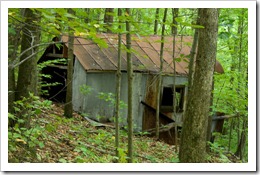
Shack-Jason_PrattGood point. Who cares if the shack gets a cheap paint job instead of a foundation and a comprehensive re-modeling? Will the business owner know or care? Do the contractors you hired care? Are you going to be around long enough to care? Are you and your employees, managers and consultants acting as house job flippers, painting over the flaws so you can update your resumes, take the profits and move on?

Jim asks:
“Are long-term employees more likely to care about problems that may happen five years from now? Are Highly Paid Consultants much less likely to?” 
Good question. Suppose that I want to fix the shack. Maybe I’m tired of having to empty the buckets that catch the drips from the roof (or restart the J2EE app that runs itself out of database connections a couple times a week). If this repair is to be anything other than a paint-over, at least one element in the business owner-->employee-->consultant-->contractor chain will have to care enough about the application to ensure that the remodeling is oriented toward long term structural repairs and not just a paint-over. The other elements in the chain need to concur.

For much of what I host and/or manage, I’m on the second or third remodeling cycle. I’ve seen the consultants parachute in, slap a coat of paint on the turd and walk off with a half decade of my salary. I don’t like it. This puts me squarely in the camp of putting the effort into fixing foundations instead of slapping on paint and shingles. I’ve seen apps that have been around for ten years and two refresh cycles, have had ten million dollars spent on them and still have mold, rot and leaks from a decade ago. But they have a shiny new skin and state of the art UI. For wireframes, UI models, usability studies and really nice Power Points? Spare no expense. Do they have a sane data model and even trivial application security? Not even close. Granite countertops are in scope, fixing the foundation is out of scope.

Things like that make me crabby.

For now I’ll assume that the blame lies with IT. Somewhere along the line the non-technical business owners have been led to believe that the shiny face and the UI is the application, and that the foundational elements (back end code, databases, servers, networks and security) are invisible, unimportant, or otherwise non-essential.

One, Two, Buckle my Shoes. How many Laptops Can We Lose.

Last summer Dell commissioned a study[1] to determine how many laptops were lost/stolen at airports. The study reported 12000 lost laptops per week at US airports. The study was reported as fact just about everywhere, including a whole bunch of high-profile security related blogs. I did some quick mental math & thought 'where do they store them all? There must be a heck of a big pile of them somewhere...'. So I bookmarked the study and thought that it'd make a good data loss related blog post someday.